SaaS, agent-based AI and the supply chain: is this the end of static software?
05 May 2026

05 May 2026
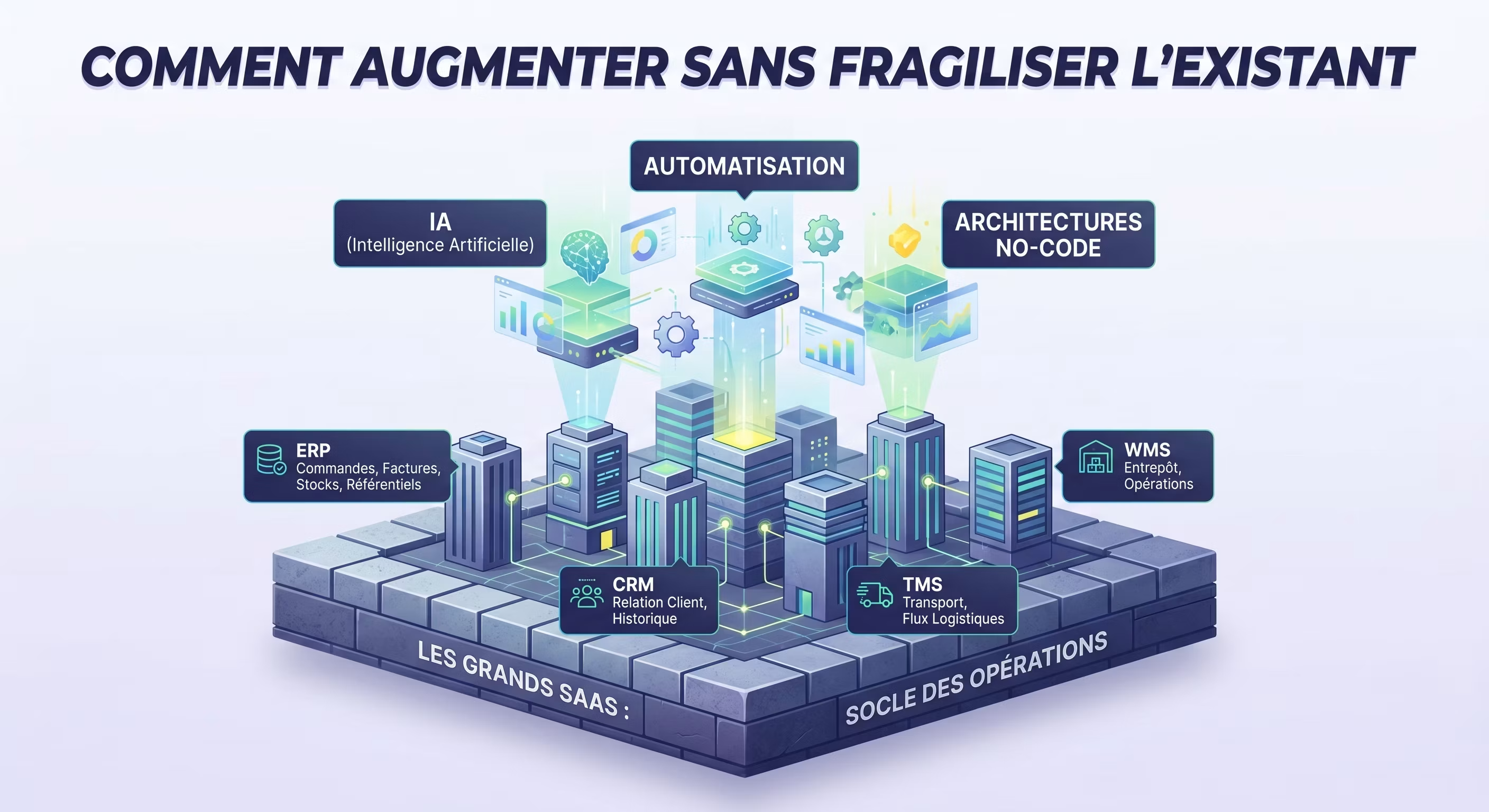
Major SaaS providers aren’t going away, but their role is evolving. In the supply chain, value is shifting towards AI-powered, no-code and interoperable platforms capable of orchestrating workflows, automating decisions and optimising stock levels without the need for a major overhaul.
In most companies, the major established SaaS providers have become the go-to solutions. They host critical data, manage transactions, secure processes and ensure business continuity. Replacing them is rarely straightforward.
An ERP system centralises orders, invoicing, procurement and product catalogues. A WMS manages the warehouse. A TMS organises logistics flows. A CRM system tracks customer relationships. These tools are connected to dozens of applications, teams, business rules and reporting systems.
It is precisely for this reason that they are so resilient. Their strength lies not only in their functionality, but also in the depth of their integration. Within a supply chain, changing a core system can affect stock levels, procurement, lead times, carriers, frontline teams, EDI interfaces, dashboards and, at times, even customer relations.
So the right question is not: should we replace the major SaaS platforms?
The real question is: how can we enhance them without undermining what already exists?
This is where AI, automation and no-code architectures are paving the way.
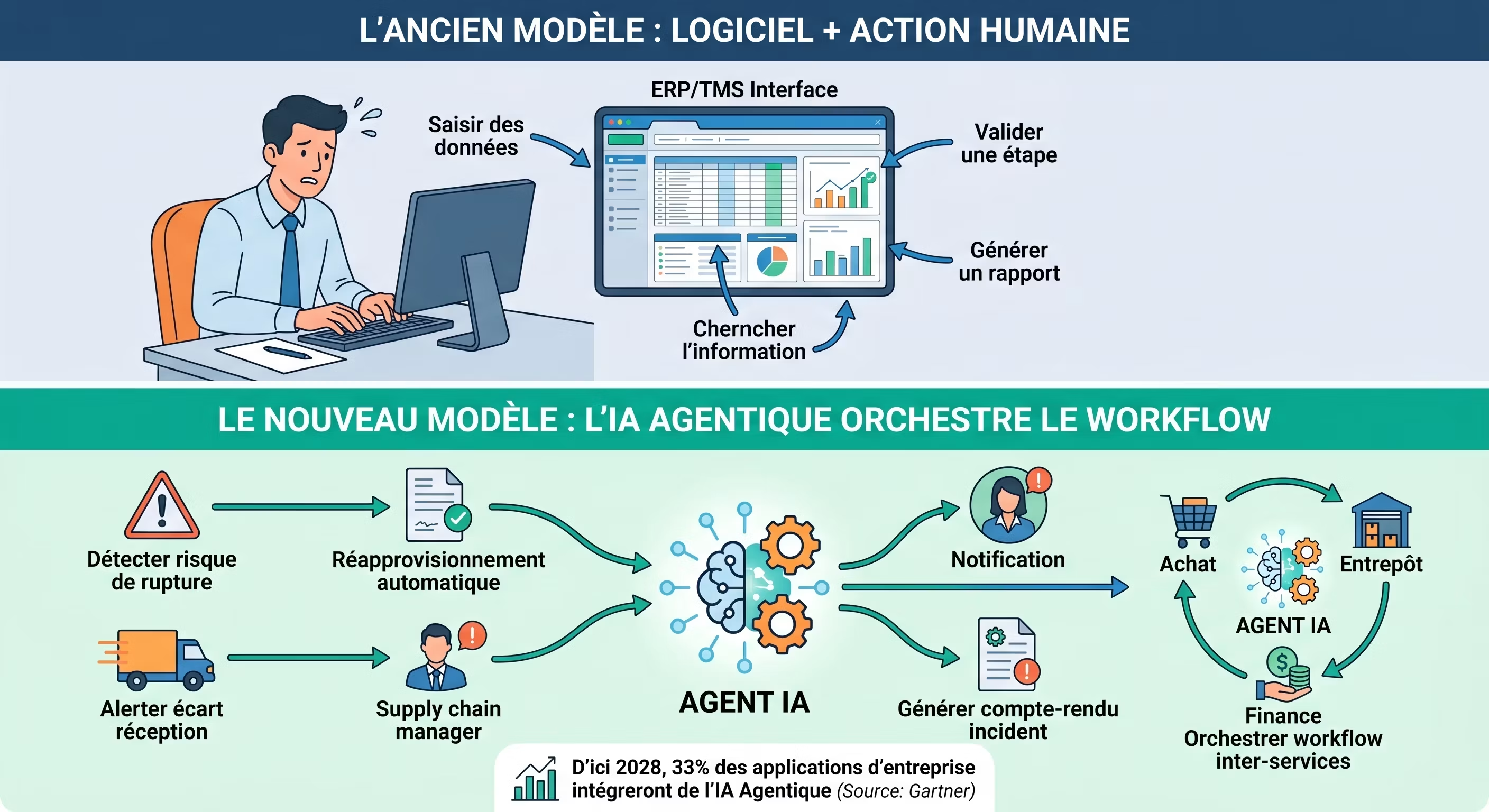
For a long time, digitalisation simply meant inputting processes into software. Users had to log in, search for information, fill in a field, confirm a step, export a file or follow up with a contact.
With agent-based AI, the situation is reversed. The system no longer merely displays data: it can analyse a situation, detect an anomaly, recommend a course of action, trigger a workflow or coordinate multiple tools.
In the supply chain, this brings about a fundamental shift in the way operations are managed. An AI agent can, for example:
detect a risk of stock-out for a critical item;
compare stock levels with demand forecasts;
prioritise an order based on the customer, the deadline or the margin;
offer an automatic restocking service;
notify a manager in the event of a discrepancy upon receipt;
generate a transport incident report;
coordinate a workflow between procurement, warehousing, finance and customer service.
This trend is not merely theoretical. Gartner estimates that 33% of enterprise software applications will incorporate agent-based AI by 2028, compared with less than 1% in 2024, and that 15% of day-to-day business decisions could be made autonomously by AI by that same date.
For supply chain professionals, the benefit is clear: AI should not be just another interface. It must become a layer of intelligence capable of turning data into action.
Large-scale transaction systems will remain difficult to replace in the short term. Peripheral modules, on the other hand, are much more vulnerable.
Manual reporting, request approval, supplier collaboration, performance analysis, incident tracking, dashboard creation, stock alerts, purchase requests, quality control, and basic planning: these use cases are often covered by specialised SaaS add-ons, which can be costly, inflexible, or poorly adopted.
However, AI can now meet some of these needs more quickly and with less friction. It can summarise, categorise, alert, prioritise, compare, document and trigger actions based on data from multiple systems.
Let’s take a simple example: a company already has a scheduling tool linked to HR, payroll and invoicing. Replacing it would be time-consuming and risky. On the other hand, adding an AI layer capable of optimising schedules based on absences, peaks in activity, available skills and delivery constraints delivers immediate value without having to rebuild the entire system.
The same logic applies to stock optimisation. Rather than creating multiple Excel files or adding a standalone module, an integrated platform can aggregate data on sales, purchases, stock levels, forecasts and supplier lead times to recommend the right course of action.
The winning model isn’t necessarily the “new SaaS that replaces everything”. It’s often the agile layer that makes what already exists smarter.
The supply chain is not set in stone. Rules change, suppliers evolve, regulatory requirements are becoming more stringent, customer expectations are rising, and uncertainties are on the increase. In this context, waiting several months to adapt a process becomes a hindrance.
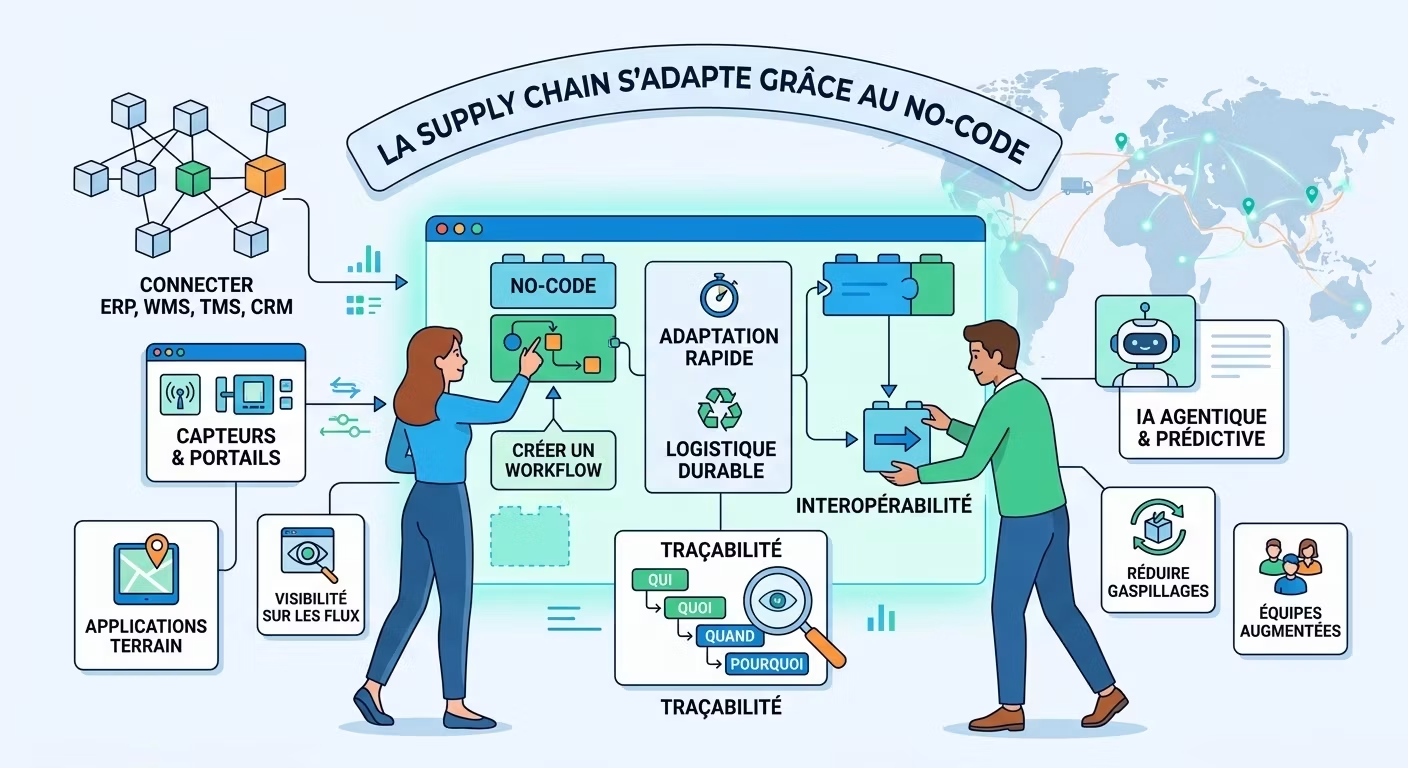
No-code addresses this challenge. It enables business teams to configure workflows, adjust rules, create forms, track validations and connect data without having to rely solely on lengthy development cycles.
But no-code alone is not enough. The real value comes from combining it with three elements:
Interoperability, to connect ERP, WMS, TMS, CRM, transport tools, sensors, supplier portals and field applications.
Traceability, to know who did what, when, why, using what data, and in accordance with which rules.
AI, moving from a descriptive approach to a predictive and prescriptive one.
Gartner has identified agent-based AI, ambient intelligence and augmented connected teams as major technology trends for the supply chain in 2025. The aim is clear: to improve organisations’ connectivity, operational intelligence and adaptability.
This approach also helps to improve sustainable logistics. Greater visibility over logistics flows, idle stock, delivery routes, returns and stock-outs helps to reduce waste, unnecessary mileage and decisions taken too late.
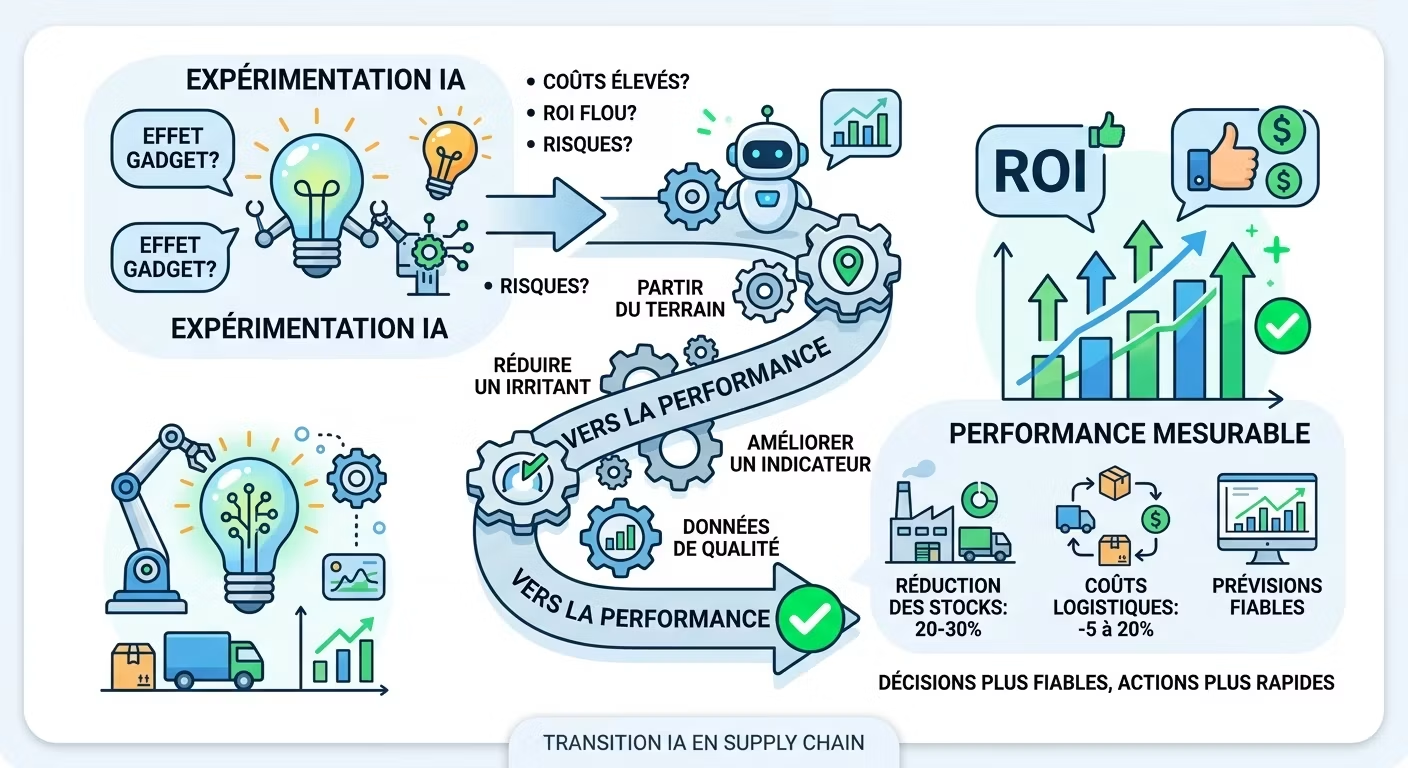
AI is attracting a great deal of attention, but not all initiatives create value. Gartner predicts that over 40% of agent-based AI projects could be cancelled by the end of 2027, mainly due to high costs, unclear ROI or insufficient risk controls.
To avoid projects becoming mere gimmicks, they must be rooted in practical experience. In the supply chain, the best use cases are those that address a specific operational pain point or improve a key performance indicator monitored by the teams.
Some priorities to focus on:
reduce stock-outs of critical items;
automate restocking alerts;
improve demand forecasting;
speed up the resolution of supplier disputes;
improve the reliability of inventories;
reduce preparation errors;
optimise stock levels;
streamline approvals between departments;
measure the carbon footprint of logistics flows.
The benefits can be significant when AI is applied effectively. McKinsey estimates that AI can reduce inventory levels by 20–30%, logistics costs by 5–20% and procurement expenditure by 5–15% in certain retail contexts.
The outlook is also looking strong: Gartner predicts that 70% of large organisations will adopt AI-based supply chain forecasting by 2030 to better anticipate demand.
But success does not depend solely on technology. It hinges on data quality, governance, user adoption, clear lines of responsibility and the ability to measure results.
AI does not spell the end for major SaaS providers. Rather, it challenges their monopoly over the user experience, automation and value creation.
Legacy systems will remain the transactional backbone of many businesses. However, differentiation will increasingly be driven by the intelligent layers that surround them: interoperable platforms, no-code workflows, AI agents, business automation, real-time traceability and predictive analytics.
For supply chain managers, CIOs and logistics departments, the direction is clear: don’t pile up tools, but orchestrate operations. Don’t digitise for the sake of it, but make every workflow more transparent, every decision more reliable and every action faster.
The supply chain of the future will not just be powered by software. It will be connected, intelligent, flexible and capable of taking action.
No, not in the short term. Major SaaS platforms remain deeply integrated with operations, data and processes. AI will primarily change the way they are used by adding layers of automation, forecasting, recommendations and orchestration.
An agent-based AI overlay is an intelligent layer connected to existing systems. It analyses data, understands a business objective, triggers workflows, and can recommend or execute certain actions under human supervision.
No-code technology enables processes to be adapted quickly without having to wait for lengthy development cycles. It gives business teams greater autonomy to create workflows, adjust rules, automate validations and improve operational management.
The most relevant use cases are those that have a measurable operational impact: stock optimisation, demand forecasting, stock-out alerts, automated restocking, dispute management, traceability of logistics flows and performance monitoring.
A clear record must be kept of the data used, the recommendations generated, the actions triggered and the human approvals. Traceability is essential for ensuring the reliability of decisions, auditing workflows and building user confidence.
Yes. By improving visibility over stock levels, logistics flows, delivery routes, returns and forecasts, AI helps to reduce unnecessary travel, overstocking, stock-outs and waste. It is becoming a key driver of performance and sustainable logistics.
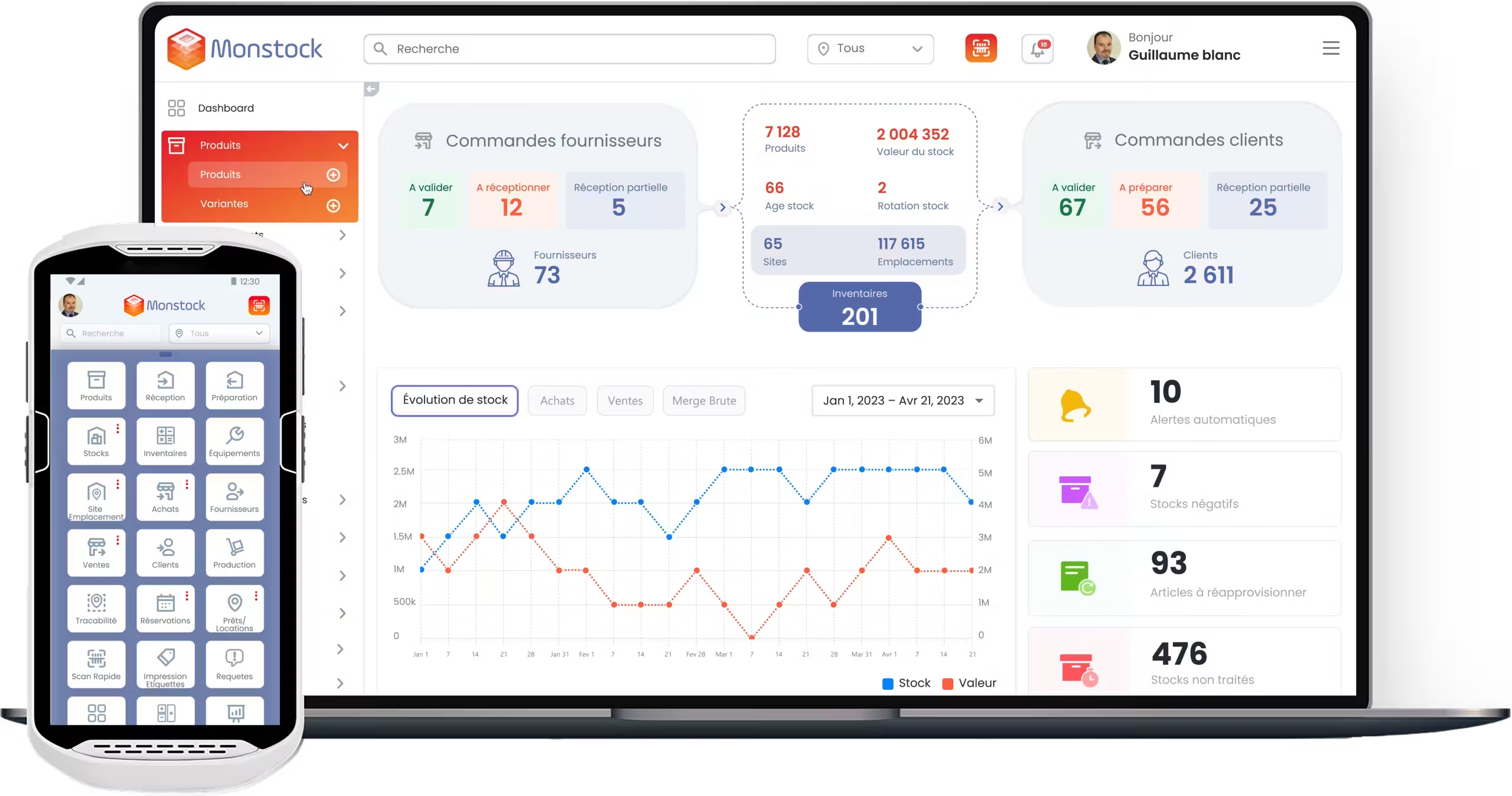
Monstock helps you turn your stock into a real strategic asset. Thanks to agile and intelligent management, our solution enables you to anticipate risks, secure your supplies and ensure business continuity, even in times of uncertainty.
To find out more about strategic inventory management and discover other use cases, click here.
For further information, please contact the Monstock team.
Sign up for our newsletter today